
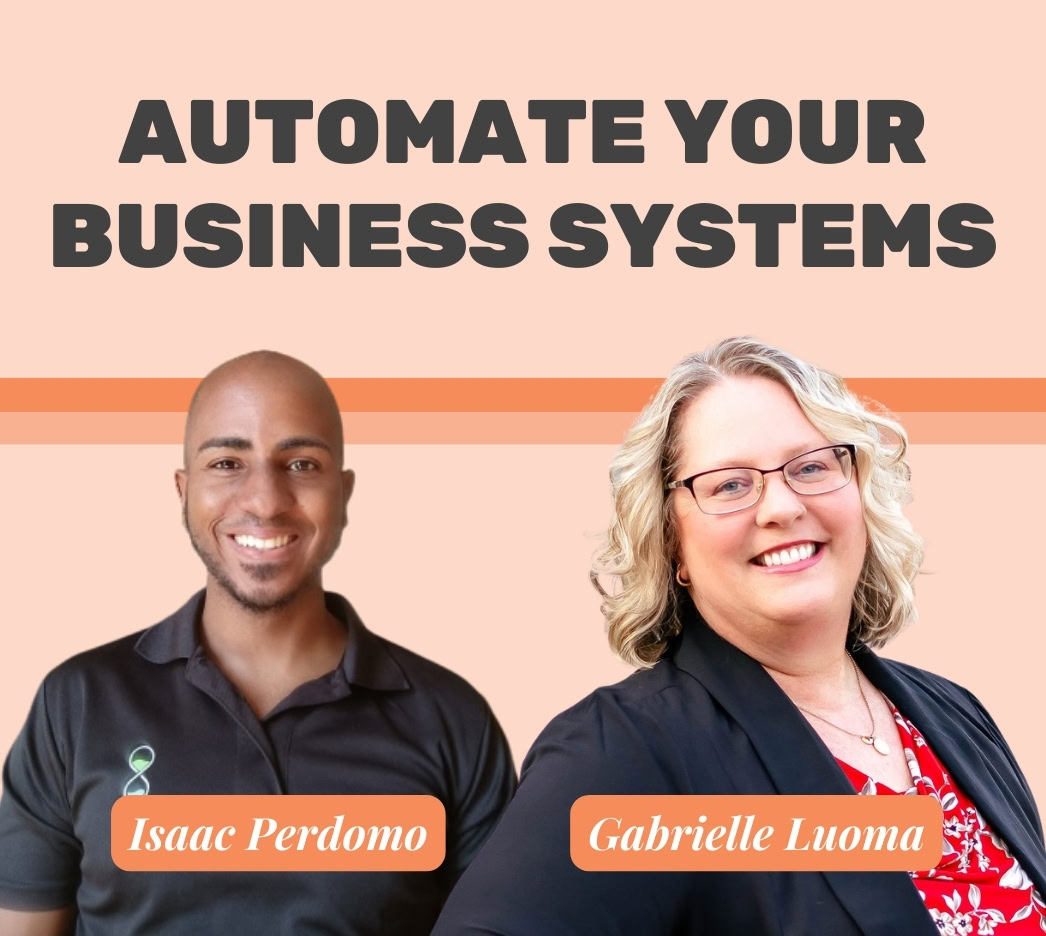
Automation vs. AI: What Every Service-Based Business Owner Actually Needs to Know
March 10, 2026


By: Gabrielle Luoma CPA, CGMA
By: Gabrielle Luoma CPA, CGMA
A conversation with Isaac Peromo, CEO & Founder of Opser — an automation agency helping accounting firms do more with what they already have.
If you’ve spent more than five minutes on social media lately, you’ve heard it: AI is going to change everything. Robots. Automation. The future is here. And while there’s truth in that, the noise can make it really hard to know what any of it means for your actual business, especially if you’re running a service-based company and your priority is serving clients, not becoming a tech expert.
I recently sat down on Entrepreneurship Uncovered with Isaac Peromo, CEO and Founder of Opser, an automation agency dedicated to helping accounting firms make the most of their existing tools and team. Isaac and I actually work together, so I can speak firsthand about the difference this kind of thinking makes. And what he shared in this conversation? Gold.
First Things First: Automation and AI Are Not the Same Thing
People use these terms interchangeably all the time, and it creates real confusion when you’re trying to figure out what you actually need.
Here’s how Isaac breaks it down:
Automation is anything that eliminates or reduces manual steps in a process. It’s been around for a long time, think QuickBooks rules, Excel formulas, or even an out-of-office email reply. The key is that automation works on objective criteria: “if this vendor, code it to this category.” It’s precise, consistent, and reliable.
AI introduces a new capability: the ability to handle subjectivity. Instead of needing exact rules, AI can interpret vague instructions like “if this email looks like a complaint, do this.” It doesn’t need the exact trigger to take action.
But that flexibility comes with a catch. AI can hallucinate, meaning it can make things up. In accounting and finance, where accuracy is everything, that’s a serious problem. Isaac shared a story about a firm that tried to use AI to pull data for client dashboards. The AI was fabricating numbers. Not ideal.
The takeaway: Use automation when precision is required. Use AI where you need interpretation. Don’t let the hype drive the decision.
The Top 3 Automations That Give Service Businesses the Biggest Return
When I asked Isaac where service-based business owners should start, he didn’t hesitate. Here’s his list:
1. Reporting
As your business grows, you have to let go. That’s just the reality of scaling. But letting go doesn’t mean losing visibility, and that’s exactly where automated reporting comes in. When your metrics are generated automatically and consistently, you can lead with confidence without micromanaging every detail.
And we’re not just talking about financial reports. Think about your deals, your close rate, your operations data, and where your revenue is coming from. That kind of insight is what separates business owners who react to problems from those who stay ahead of them.
2. Client Onboarding
Your onboarding process is your first impression. Every client goes through it, no matter what service they’ve purchased. If it’s clunky, slow, or inconsistent, that sets the wrong tone for the relationship.
Streamlining and automating client onboarding is one of the highest-ROI moves you can make. It frees up your team’s time, creates a better experience for your clients, and ensures nothing falls through the cracks.
3. Your Core Service Delivery
This one is the heaviest lift, but also the biggest win. For accounting firms, that might be tax prep or bookkeeping. For your firm, it’s whatever you do every single day. If you can map, standardize, and automate that end-to-end process, you will see a transformation in efficiency.
Isaac’s advice if you’re feeling overwhelmed by this one: don’t try to overhaul everything at once. Start with every new client coming on board. Let the old clients stay on the old system for now, and build the right structure going forward. You’ll get there without the chaos.
How to Choose the Right Tools (Without Going in Circles)
One of the most common mistakes business owners make is starting with the tool instead of the problem. You hear about a new app, get excited, and try to make your process fit around it. That’s the square peg, round hole trap.
Isaac’s approach is the opposite: start with the process. Map it out from beginning to end, identify the gaps, and then go look for tools that solve those specific problems. When we went through this at MOD Ventures, it completely changed how we evaluated our options.
Beyond process fit, he also recommends evaluating tools on three factors:
- Cost-effectiveness — it needs to make financial sense for your business.
- Ease of use — if it’s not intuitive, your team won’t actually use it, and you’ve wasted the investment.
- Integration-friendliness — does it have an API? Can it talk to other tools? Technology will always evolve, and you don’t want to be locked into something that won’t play nicely with your future stack.
Quick explainer on the API piece: Isaac describes an API as “a link for a robot.” Just as you log in with credentials and take actions in a system, an API lets another tool log in and perform actions on your behalf automatically. When evaluating any new software, ask whether it has one.
Change Management: The Part That’s Actually About People
Here’s the thing about implementing new technology: even the best tool fails if your team doesn’t buy in.
Isaac’s biggest piece of advice here is to involve your team early. When people feel heard, even if you ultimately make a different decision than what they suggested, they’re far more likely to get behind the change. They’re not just implementing someone else’s decision; they’re part of the solution.
On the data side, his advice is simple: test before you commit. Most tools offer free trials and demos. Don’t just watch a demo video, actually load in some of your data and see what it looks like in real life. You can’t fully envision how your workflows will translate until you’ve done it.
Don’t Try to Do Everything at Once
I’ll be honest, this one hit home for me. Last tax season, I tried to tackle too many changes at once. It was overwhelming for everyone, including me.
Isaac talked about how, over time, he’s gotten much better at saying no, even when a client is excited about doing three new things at once. As a service provider, especially one who genuinely wants to help, the temptation to say yes is real. But protecting your client’s bandwidth, their team, and their resources is part of the job. Sometimes the most helpful thing you can do is slow them down.
If you’re a fellow people-pleaser: this is your reminder that having a strong opinion and standing by it is an act of service, not stubbornness.
Technology Deserves a Seat at the Table
One of the most forward-thinking ideas Isaac shared: technology should be part of your organizational structure, not just a vendor you call when something breaks. He shared an example of a large company that merged its technology and HR departments into a single “resources” department, because whether it’s a human or a system doing the work, it’s all resources.
The implication for small business owners: before your next hire, ask the question, could automation handle part of this role? Could we remove tasks from an existing team member’s plate so they can focus on higher-value work? Having someone who specializes in technology and automation involved in those conversations can change your trajectory.
That’s what having Isaac on our accountability chart has looked like at MOD Ventures. Not just a vendor. A partner who understands our business, our team, and our goals, and helps us use technology to get there without burning anyone out in the process.
You don’t have to master AI to get massive results from technology. Start with your process, automate the repeatable parts, involve your team, and take it one step at a time. The efficiency gains are real, and so is the peace of mind that comes from knowing your business is running on solid systems, not just hustle.
Ready to build the financial systems your business deserves?
At MOD Ventures, we help entrepreneurs understand their finances, streamline their operations, and create the businesses of their dreams. If you’re ready to take the next step, schedule a consultation with us.
Leave a Reply


You May Also Love

CLOSE